
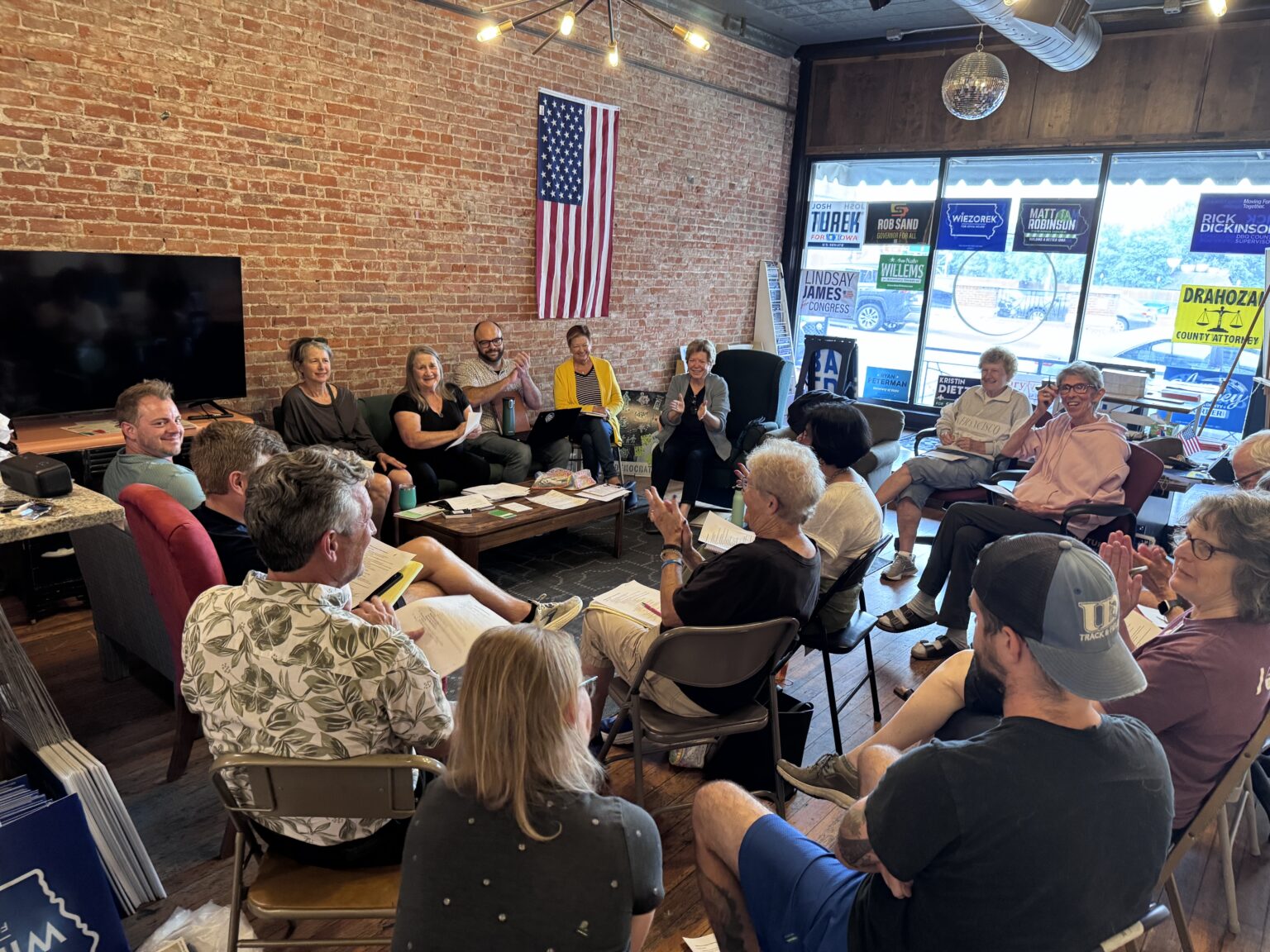
There’s something powerful about knowing your neighbors.
Not just recognizing the person who lives three doors down, but knowing their name. Saying hello when you see each other outside. Knowing a little about their family, their kids — maybe even their pets! And knowing that when something important is happening in your community, you can talk about it face to face.
That simple idea is at the heart of the Dubuque County Democrats’ Neighbor-to-Neighbor program.
Neighbor-to-Neighbor, or NtN, is built around a straightforward belief: some of the most meaningful conversations we have about our community don’t happen through advertisements, mass emails, or social media. They happen between people who already share something in common — including the place they call home.
Through NtN, volunteer Neighborhood Contacts connect with people who live near them, share useful election information, listen to what matters to their neighbors, and help more people participate in their community.
But the goal is bigger than any single election.
A Simple Idea That Felt Right at Home
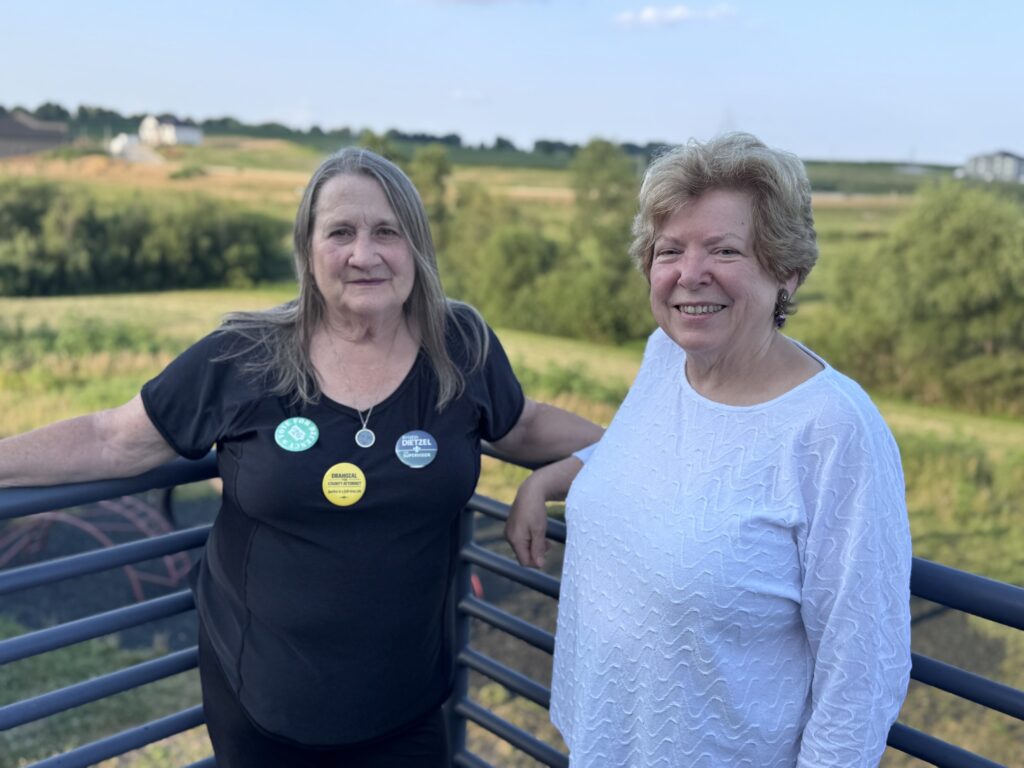
Like many good ideas, Neighbor-to-Neighbor started with a conversation.
At a Dubuque County Democrats Central Committee meeting, a couple from Urbandale shared how a neighborhood-based organizing program had changed the way volunteers connected with people in their own community. Rather than showing up only during election season, volunteers built genuine, ongoing relationships with the people living nearby.
The idea stayed with Elaine Rockwell and Dianne Gibson long after the meeting ended.
“The more we talked about it, the more we realized this wasn’t just another campaign program,” Elaine recalls. “It fit who we already are. Dubuque has always been a community where neighbors look out for one another. Neighbor-to-Neighbor simply gives us a way to strengthen those relationships.”
Dianne saw the same potential — especially in creating a program that people could fit into their everyday lives.
“People are busy, but they still care deeply about their communities,” she says. “We wanted to create something that felt welcoming instead of overwhelming — a way for ordinary people to stay connected with the neighbors they already know and the neighborhoods they already love.”
With that vision in mind, Elaine and Dianne founded Dubuque County’s Neighbor-to-Neighbor program, beginning with a pilot in a handful of Dubuque precincts.
Seventeen volunteers stepped forward to become the program’s first Neighborhood Contacts.
Since then, the idea has begun to grow: neighbors reaching neighbors, relationships creating new relationships, and more people discovering that getting involved in their community can start right outside their own front door.
Starting With the People Closest to Us
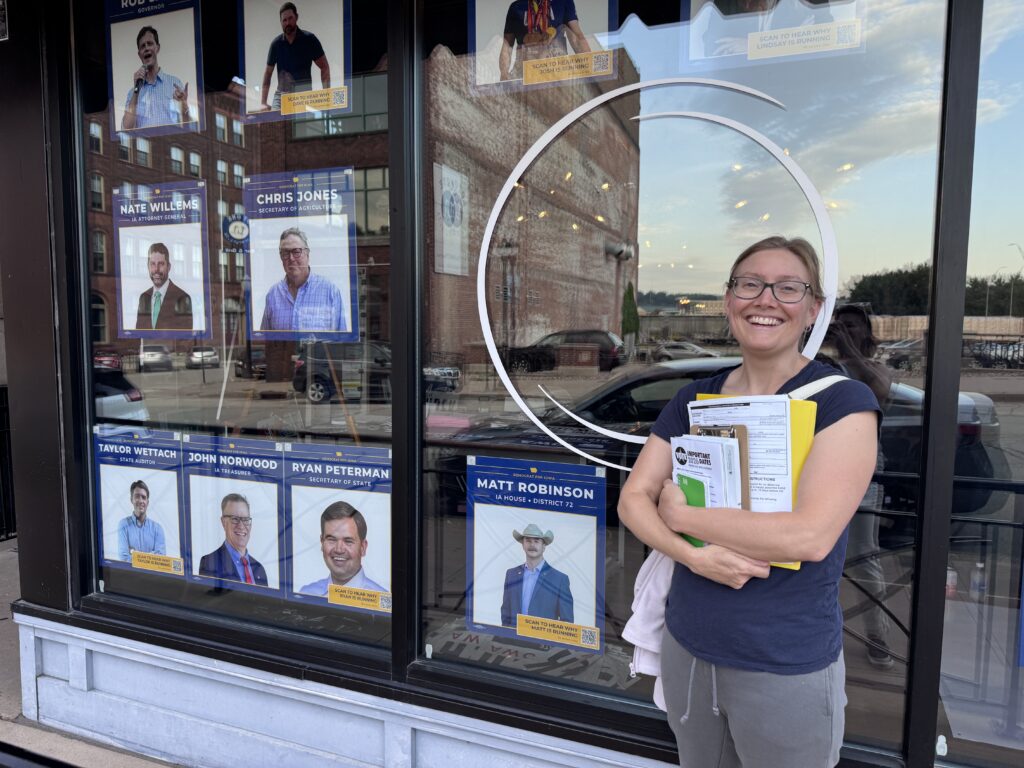
Hana Velde is brand new to Neighbor-to-Neighbor. What drew her to the program wasn’t simply the opportunity to encourage people to vote. It was the opportunity to build relationships with the people around her.
“What excites me the most about NtN is the idea that we’re here trying to foster community connections with the people who are literally closest to us — folks right here in our own neighborhoods.”
For Hana, that means bringing back some of the everyday connections that can be easy to lose: knowing neighbors’ names, knowing a little about their families, and becoming someone nearby they can turn to when they need support.
And sometimes, that support might be as simple as answering a question about an election or reminding someone when it’s time to vote.
Other times, Hana believes it can become something deeper: “honest-to-goodness, friendly, empathetic, big-hearted neighborliness.”
That’s Neighbor-to-Neighbor at its best!
More Than Getting Out the Vote
NtN is certainly about civic participation. As elections approach, Neighborhood Contacts can make sure people nearby know when and where to vote, share reliable information, answer questions, and help neighbors overcome barriers that might otherwise keep them home.
But longtime Democratic volunteer Sandy Hockenberry sees another possibility in the program.
“It’s not just a get-out-the-vote effort. It’s a community-building activity.”
Sandy has been involved in Democratic politics and organizing for years. What appeals to her about Neighbor-to-Neighbor is its local, decentralized approach: people concentrating on their own part of the community and building relationships from there.
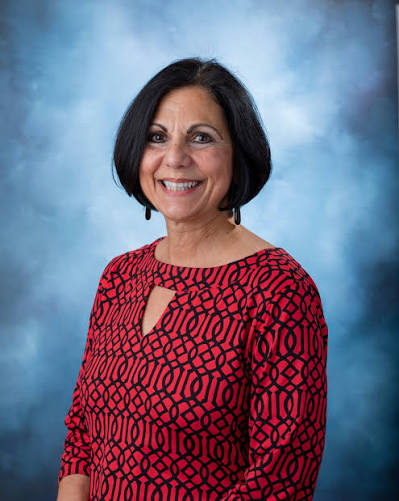
She hopes those relationships can accomplish something our politics badly needs: increased civility.
“Hopefully we can motivate people to vote, but also find more connections, take down the temperature a little bit, and work toward something together.”
That doesn’t require agreeing about everything. It starts with talking to one another.
A New City, and a Reason to Get Involved
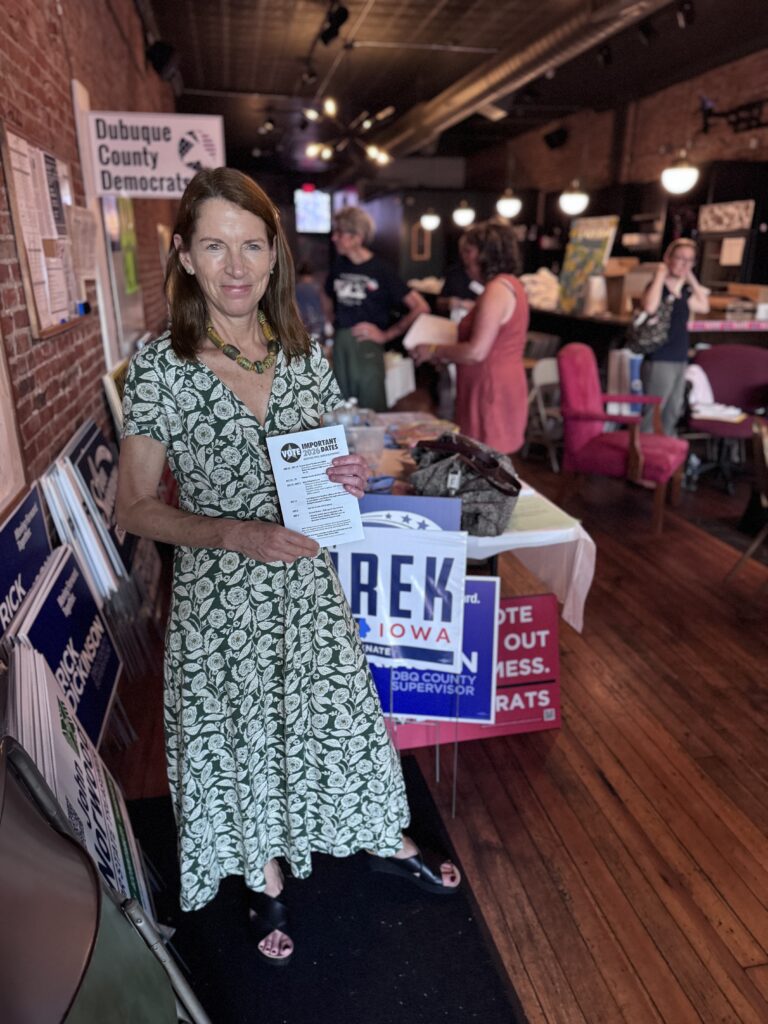
For Corinne Rothblum, Neighbor-to-Neighbor comes at the beginning of another kind of new chapter.
Corinne moved to Dubuque just a few months ago and now works for the City of Dubuque as an Economic Mobility Special Assistant with Community Impact & Neighborhood Support. As she settles into a new community, she also sees participation in our democracy as something worth protecting.
Corinne has lived and worked in places around the world where rights Americans can easily take for granted — including the right to vote — are not always guaranteed.
That experience shapes how she thinks about civic participation today.
She worries that frustration with our current political environment can make people want to disengage altogether. Her response is the opposite: this is exactly when participation matters.
“In the political environment we’re in, I think it causes a lot of people to just want to check out. It’s really important to remind people why voting is so critical to sustaining our democracy.”
Neighbor-to-Neighbor gives people a way to offer that reminder personally — not as another political message arriving on a screen, but as one neighbor talking with another.
What Does a Neighborhood Contact Actually Do?
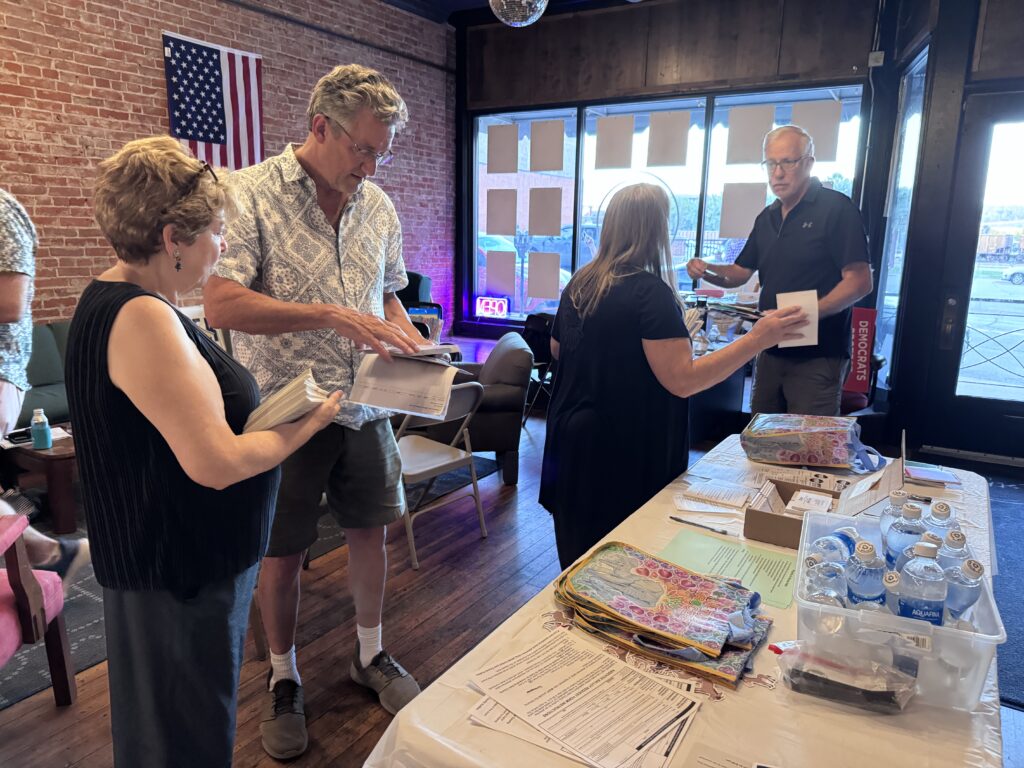
The idea is intentionally simple.
Neighborhood Contacts are assigned a manageable group of people near them and begin making connections. Contacts receive training, information, and resources from the Dubuque County Democrats, but the most important thing they bring to the program is themselves.
There’s no need to be a political expert. There’s no perfect script. And this isn’t about showing up at someone’s door and launching into a political sales pitch.
It’s about becoming a familiar, trusted point of connection in your own neighborhood.
As elections approach, that might mean checking whether someone knows how or where to vote. It might mean sharing information about candidates or important dates. It could mean helping someone find an answer to a question or connecting them with additional resources.
And between elections, it can be something even simpler: Be a good neighbor.
Why Neighbor-to-Neighbor Works
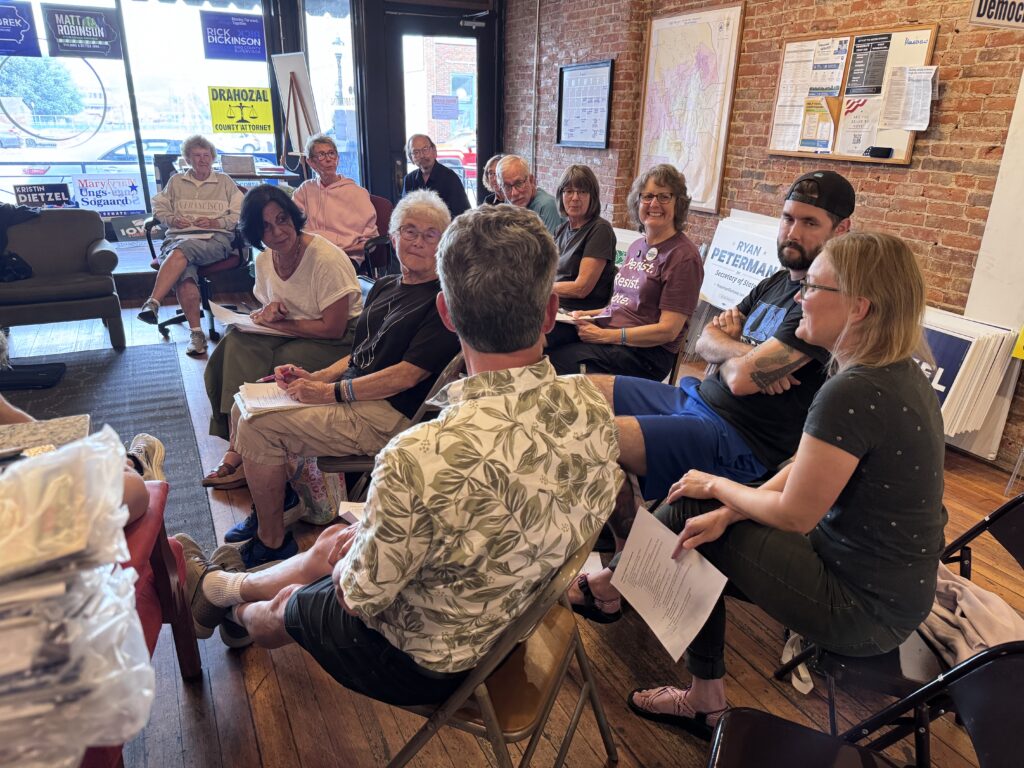
Political campaigns have plenty of ways to reach people. There are television ads, mailers, texts, emails, social media posts, phone calls, and door knocking.
Those tools have their place, of course. But Neighbor-to-Neighbor starts somewhere different: with relationships.
A conversation with someone you know — or someone you regularly see in your own neighborhood — feels different from a message sent to thousands of people at once.
It creates room to listen. It creates room to ask questions. And over time, it creates trust.
That philosophy is also reflected in the Dubuque County Democrats’ broader approach to community engagement: politics isn’t only something that happens during elections. It’s part of showing up, listening, serving, and building relationships throughout the year.
One Neighbor Leads to Another
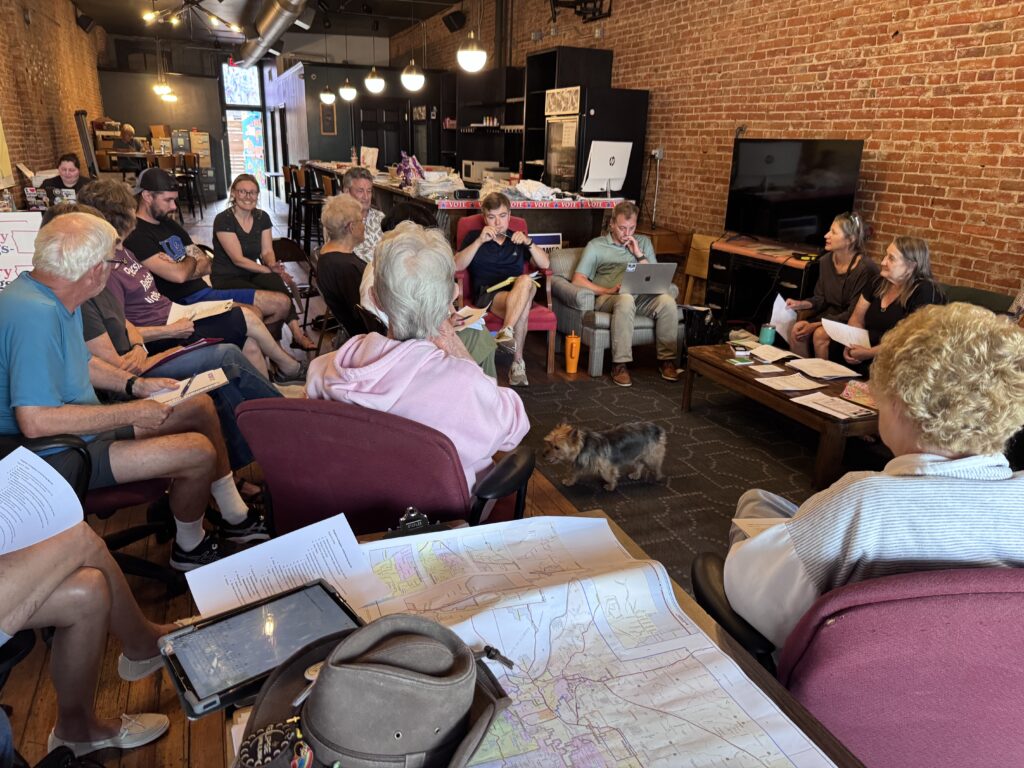
The first Neighbor-to-Neighbor trainings have already brought Dubuque County residents together to learn, share ideas, and prepare to connect with people in their own neighborhoods.
But the long-term vision isn’t simply to build a larger volunteer list. It’s to build a stronger web of relationships across Dubuque County.
One Neighborhood Contact gets to know a few more people on their block. One of those neighbors decides to become more involved. Another shows up to vote after sitting out the last election. Someone else attends a community event for the first time. Two people who might otherwise have passed each other without speaking discover something they have in common.
Those are small moments. But communities are built from small moments.
Hana may have captured the spirit of the program best. Neighbor-to-Neighbor can help get people to the polls, she said, but it can also help us practice something much more fundamental:
💙 Big-hearted neighborliness. 💙
And Dubuque County could always use more of that!
Learn More & Get Involved with Neighbor-to-Neighbor
You don’t need years of campaign experience to become a Neighborhood Contact. You just need a willingness to listen, connect, and help people in your neighborhood stay informed and involved. If you’re interested or simply want to learn more, let us know by filling out the contact form linked below. 👇