
Why are school vouchers one of the biggest education debates in Iowa?
Education has long been one of Iowa’s proudest traditions. Strong public schools have helped generations of students prepare for college, careers, military service, and life in their communities. That’s one reason changes to education policy often generate strong opinions—and a lot of questions.
In recent years, few changes have drawn more attention than Iowa’s Education Savings Account (ESA) program. You may have heard it described as a school voucher program. Supporters generally use the term Education Savings Account, while many critics continue to call it a voucher program because it allows public education dollars to help pay for private school tuition.
Regardless of the name, the program represents one of the most significant changes to Iowa’s education system in decades.
For some families, the program represents more educational choice. For others, it raises concerns about the future of public schools and how taxpayer dollars are spent.
So what exactly changed? Why has this become such an important issue? And why should people in Dubuque County pay attention?
Let’s start with the basics.
What is an Education Savings Account?
An Education Savings Account (ESA) is a state-funded account that eligible families can use to help pay for approved private school expenses, including tuition and certain educational costs.
The money comes from state education funding that would otherwise be part of Iowa’s investment in K–12 education. Instead of remaining entirely within the public education system, those funds can now follow eligible students who choose to attend participating private schools.
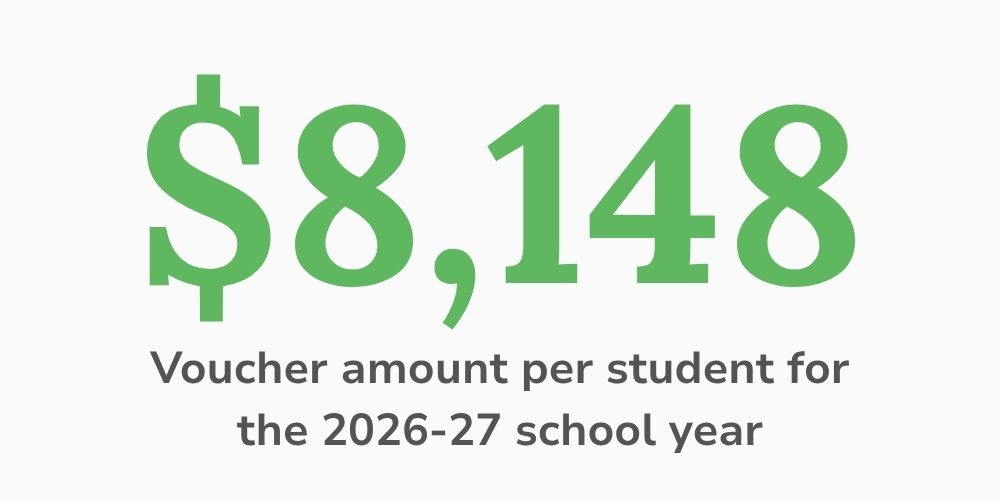
The program was created by the Iowa Legislature in 2023 and has expanded since then. Beginning with the 2025–26 school year, eligibility is no longer based on household income. Any Iowa family with a student attending an accredited private school may qualify for an ESA.
That expansion is one reason you’ve been hearing much more about the program recently.
Why now?
The debate isn’t new. Iowa lawmakers discussed various forms of school vouchers for years before the ESA program was approved.
What’s different today is the scale.
As eligibility has expanded, more families can participate, more state dollars are directed through the program, and communities across Iowa are beginning to see how those changes fit into the broader education landscape.
For many Iowans, the conversation has shifted from “Should Iowa have school vouchers?” to “What do these changes mean for our schools and communities?”
Why did Iowa create the program?
Supporters of ESAs generally point to three goals.
- First, they believe parents should have greater freedom to choose the educational setting that best meets their child’s needs.
- Second, they argue that financial assistance makes private education accessible to more families rather than only those who can afford tuition without assistance.
- Third, some believe that giving families more options encourages innovation and improvement throughout Iowa’s education system.
Governor Kim Reynolds has frequently described the program as expanding educational opportunity by putting parents—not government—in the driver’s seat when making decisions about their children’s education.
“For some families, a different path may be better for their children. With this bill, every child in Iowa, regardless of zip code or income, will have access to the school best suited for them.” —Governor Kim Reynolds
Why are others concerned?
Many educators, parents, and community members have raised different questions.
1. The school voucher program hurts public school funding.
One concern is public school funding. Because Iowa invests heavily in public education, some people worry that directing state dollars toward private education could reduce the resources available to public schools over time.
2. The school voucher program largely benefits families already sending their kids to private school.
It’s estimated that nearly 79% of students who used ESA money to help pay for private school tuition would have attended a private school regardless.
The Iowa Capital Dispatch reports:
Iowa’s ESA program provides funding to students to use on tuition and associated costs at private schools and had an estimated appropriation of $329.6 million for fiscal year 2026, according to the Legislative Services Agency. The auditor’s report said this means the state paid roughly $38,000, per student for the 20% of ESA program users who were not already projected to attend private schools.
“The program itself, though, is still paying tuition for the wealthiest families in the state of Iowa, who can barely even feel the check that they write, and a lot of people who don’t mind doing it at all,” Sand said in a news conference Wednesday.
3. Another concern is that public schools serve every student who walks through their doors, while private schools may have different admissions policies, tuition costs beyond the ESA amount, or other requirements.
4. In rural areas, another question often comes up: what happens in communities where there isn’t a nearby private school? Residents in those districts may wonder whether they will see changes in state education funding without having new educational options available locally.
These concerns don’t necessarily lead everyone to the same conclusion, but they help explain why the conversation has become so prominent.
Why is it crucial to fund our public schools?
Public schools are responsible for educating every student who walks through their doors.
That includes students with disabilities, English language learners, students experiencing homelessness, students who transfer during the school year, and many others.
School districts also maintain buildings, operate buses, provide meals, support extracurricular activities, and employ thousands of teachers and staff.
Many of these costs remain even if enrollment declines by a relatively small number of students.
Because of that, some educators worry that even modest enrollment shifts can have larger financial impacts than people might expect.
Why are rural communities paying close attention?
The discussion often looks different outside Iowa’s largest cities.
Many rural communities have few—or no—participating private schools nearby.
That raises an important question:
If families have limited access to private school options, but state education funding increasingly follows students elsewhere, what does that mean for rural districts?
Some education advocates worry that declining enrollment combined with long-term funding pressures could eventually lead to school consolidations or closures in parts of rural Iowa. Others argue that those concerns are overstated and that communities will continue adapting as they have during previous periods of demographic change.
The long-term effects are still unfolding, which is one reason the conversation continues.
Where do the Dubuque County Democrats stand?
The Dubuque County Democratic Party supports strong, fully funded public schools and opposes using public education dollars to fund private school vouchers.
Our 2026 county platform states:
“The use of education funds only for public education, barring the use of public funds for vouchers, tuition tax credits, and private for-profit education businesses.”
The platform also calls for timely and adequate funding of public schools, Area Education Agencies (AEAs), competitive educator pay, affordable public higher education, and full federal funding for special education services under the Individuals with Disabilities Education Act (IDEA).
We believe public schools are one of the most important investments our communities make. They educate every child, strengthen local communities, and provide opportunities that benefit all of us.
Why does this matter in Dubuque County?
Whether you have children in school today or simply care about the future of our community, education policy affects all of us.
School boards make important local decisions about budgets, facilities, staffing, and educational priorities. Teachers, parents, students, taxpayers, and local businesses all have a stake in the success of our schools.
As Iowa’s Education Savings Account program continues to evolve, informed local conversations will matter more than ever.
Understanding how the program works is the first step. Participating in local elections, attending school board meetings, and staying engaged in your community are how those conversations become action.
Questions Worth Watching
- How will the ESA program affect public school enrollment over the next five years?
- What trends emerge in rural communities?
- How does participation vary across Iowa?
- What happens to private school tuition over time?
- How will lawmakers evaluate the program’s success?
More about School Vouchers
- https://iowastartingline.com/news/politics/dubuque-school-voucher-tuition-increase/
- https://www.npr.org/2026/04/19/nx-s1-5683199/education-school-choice-iowa-students-charter-school-cedar-rapids
- https://www.ktiv.com/2026/06/17/sand-iowa-school-voucher-program-cost-330-million-private-school-enrollment-surges/